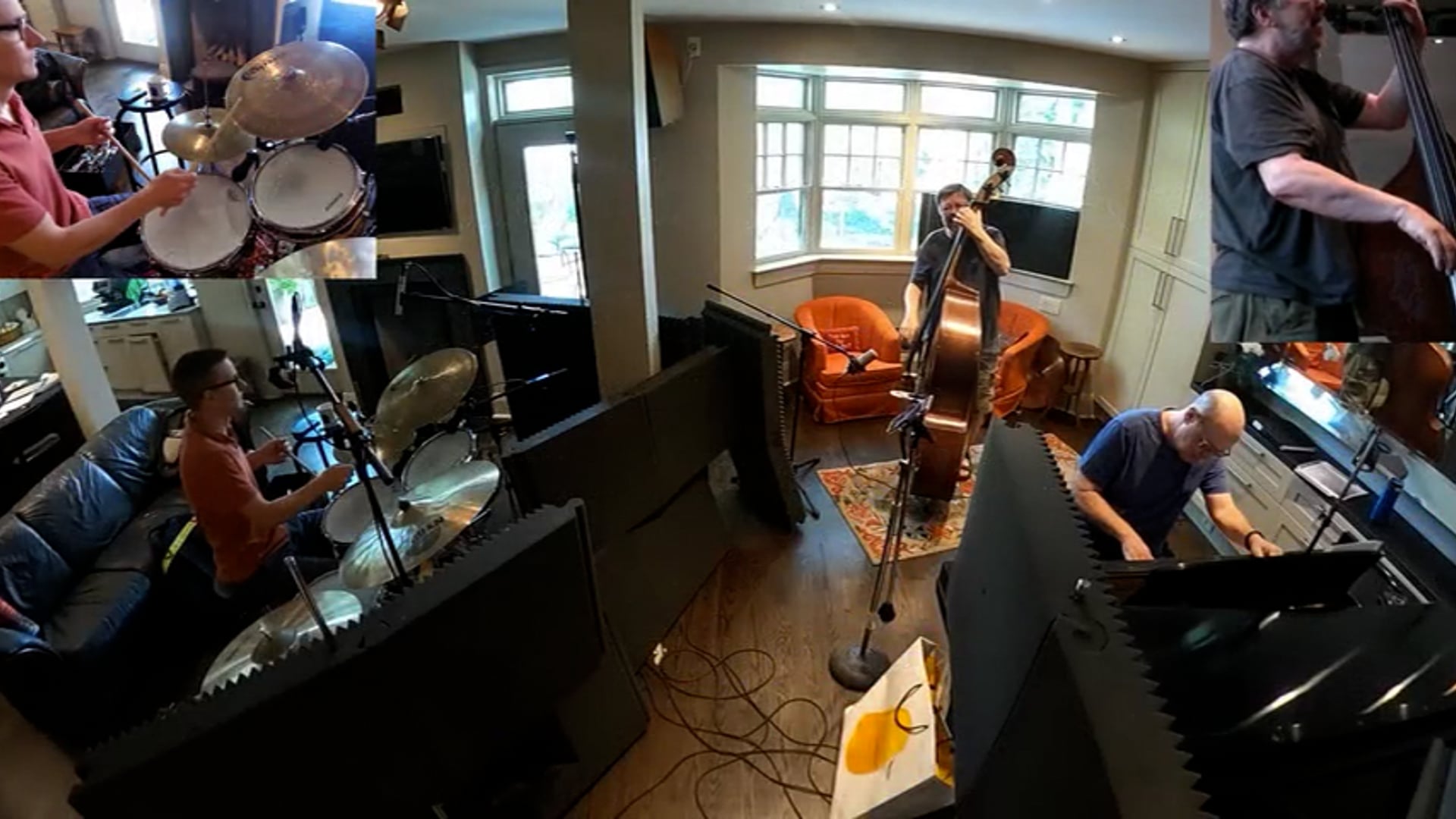
All The Things You AreThe song was written for the musical Very Warm for May (1939) and was introduced by Hiram Sherman, Frances Mercer, Hollace Shaw, and Ralph Stuart. It appeared in the film Broadway Rhythm (1944), and again in the Kern biopic Till the Clouds Roll By (1946), sung by Tony Martin.
Because of its combination of a strong melody and challenging but logical chord structure, 'All the Things You Are' has become a popular jazz standard. Its changes have been used for such contrafact tunes as 'Bird of Paradise' by Charlie Parker, 'Prince Albert' by Kenny Dorham, and 'Boston Bernie' by Dexter Gordon. 'Thingin'' by Lee Konitz introduced a further harmonic twist by transposing the chords of the second half of the tune by a tritone. From Wikipedia.
Because of its combination of a strong melody and challenging but logical chord structure, 'All the Things You Are' has become a popular jazz standard. Its changes have been used for such contrafact tunes as 'Bird of Paradise' by Charlie Parker, 'Prince Albert' by Kenny Dorham, and 'Boston Bernie' by Dexter Gordon. 'Thingin'' by Lee Konitz introduced a further harmonic twist by transposing the chords of the second half of the tune by a tritone. From Wikipedia.
Nobody Else But Me'Nobody Else But Me', sometimes called 'Nobody Else But You', is a 1946 song composed by Jerome Kern with lyrics by Oscar Hammerstein II for the 1946 Broadway revival of the musical Showboat when it was introduced by Jan Clayton as the character 'Magnolia'. This was the last song written by Kern; he died shortly before the 1946 production opened. From Wikipedia.
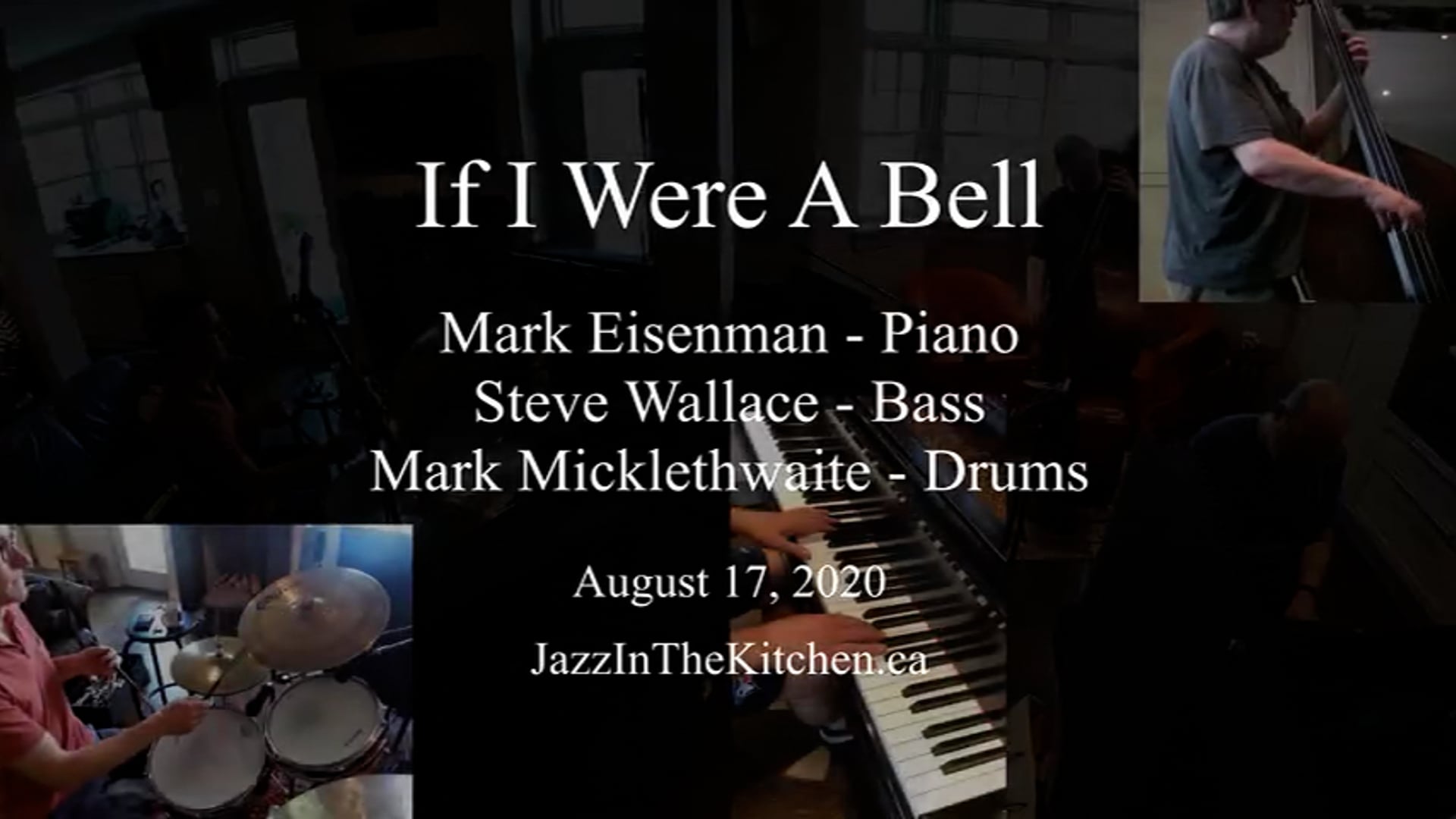
If I Were A BellIn the show Guys and Dolls, If I Were A Bell is sung by the character Sister Sarah, originally performed by Isabel Bigley on Broadway, and memorialized on the original cast album. On a bet, Sky Masterson takes Sarah Brown to Havana to have dinner and gets her very drunk. Sarah's stiff social barriers fall away and she realizes she is in love with Sky, and he with her. She sings this after they have an eventful dinner but Sky refuses to take advantage of her drunkenness. It was also recorded by Lizbeth Webb who created the part in the original London production in 1953 at the London Coliseum.
It has become a jazz standard since it was featured by trumpeter Miles Davis, on the 1956 Prestige album Relaxin' with The Miles Davis Quintet. The Miles Davis Quintet featured tenor saxophone player John Coltrane, pianist Red Garland, bassist Paul Chambers, and drummer Philly Joe Jones. The song became a Miles Davis specialty and it appears on several live session recordings and compilations in different versions. The tune was taken up and performed by countless jazz musicians and is still a favorite in jam sessions. So closely is the tune associated with Miles Davis that it is often miscredited as one of his own original compositions. From Wikipedia.
It has become a jazz standard since it was featured by trumpeter Miles Davis, on the 1956 Prestige album Relaxin' with The Miles Davis Quintet. The Miles Davis Quintet featured tenor saxophone player John Coltrane, pianist Red Garland, bassist Paul Chambers, and drummer Philly Joe Jones. The song became a Miles Davis specialty and it appears on several live session recordings and compilations in different versions. The tune was taken up and performed by countless jazz musicians and is still a favorite in jam sessions. So closely is the tune associated with Miles Davis that it is often miscredited as one of his own original compositions. From Wikipedia.
Billie's Bounce'Billie's Bounce' (also known as 'Bill's Bounce') is a jazz composition written in 1945 by Charlie Parker in the form of a 12 bar F blues. It was dedicated to Billy Shaw's admin Billie. The original recording by Charlie Parker and His Re-Boppers was inducted into the Grammy Hall of Fame in 2002. Copyright 1945 by Atlantic Music Corp. Copyright renewed and assigned 1973 to Atlantic Music Corp.
Originally an instrumental, lyrics were added later by Jon Hendricks and by Eddie Jefferson. From Wikipedia.
Originally an instrumental, lyrics were added later by Jon Hendricks and by Eddie Jefferson. From Wikipedia.
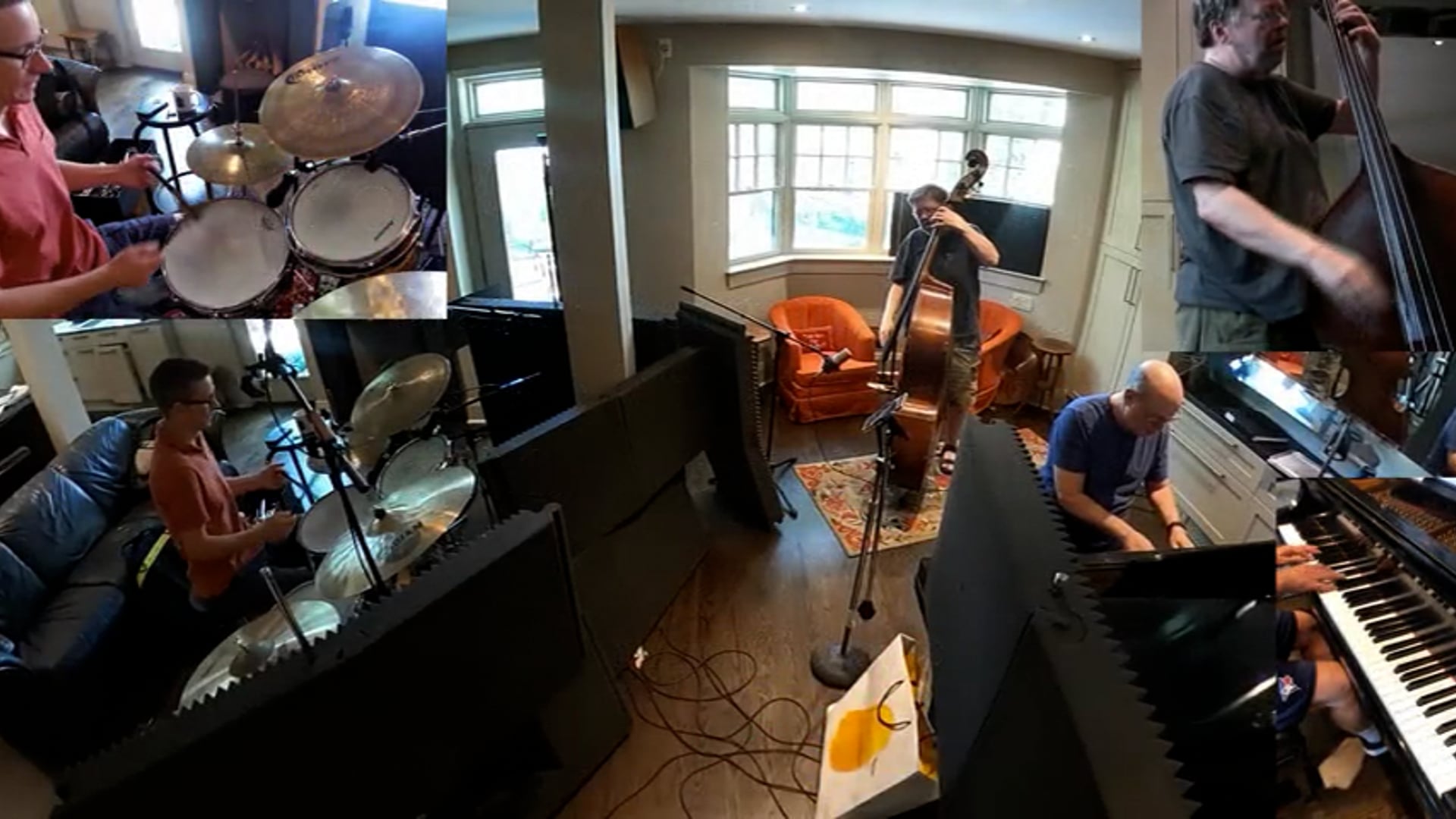
If You Could See Me Now'If You Could See Me Now' is a 1946 jazz standard, composed by Tadd Dameron. He wrote it especially for vocalist Sarah Vaughan, a frequent collaborator. Lyrics were written by Carl Sigman and it became one of her signature songs, inducted into the Grammy Hall of Fame in 1998. From Wikipedia.
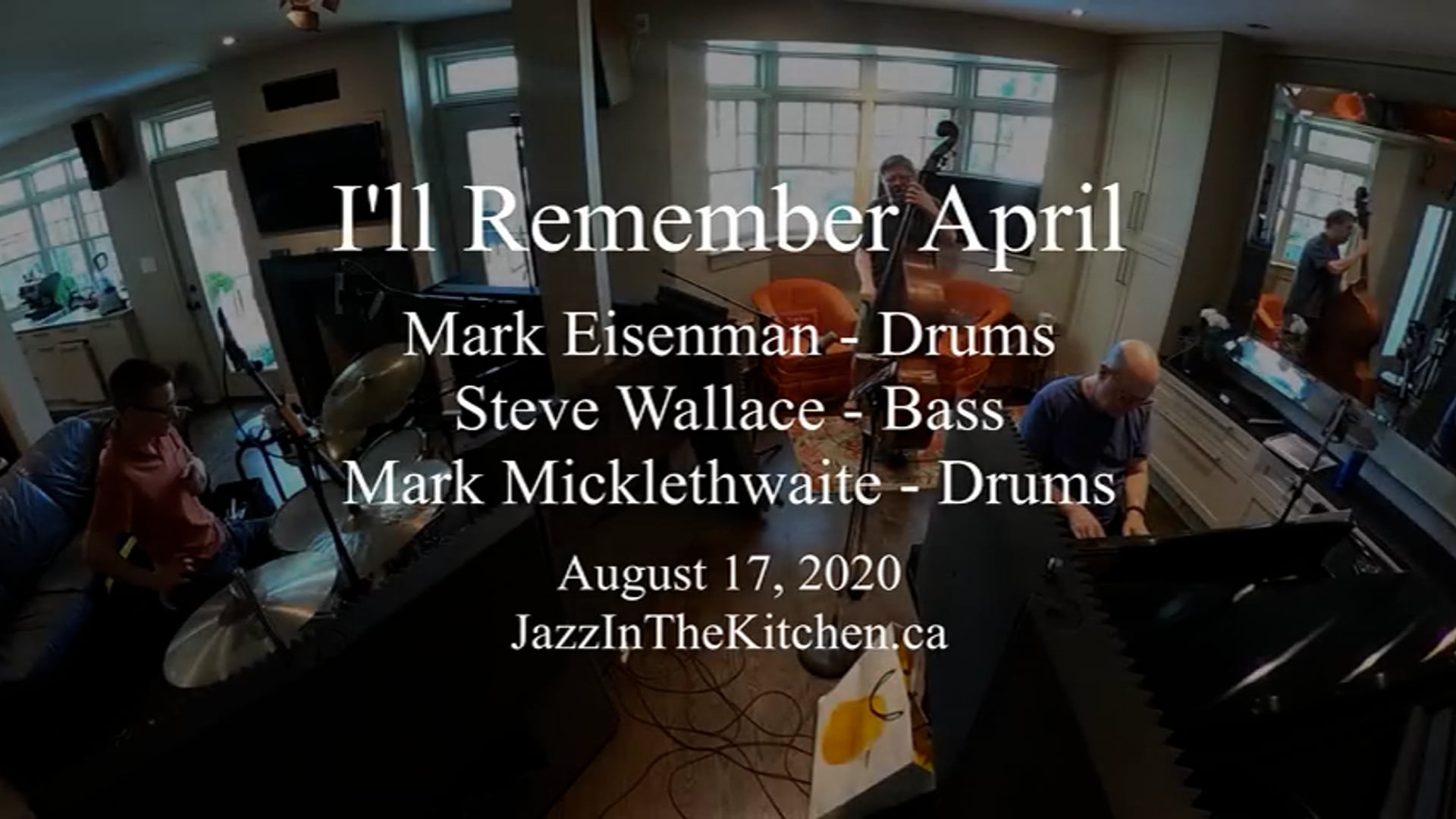
I'll Remember April'I'll Remember April' is a popular song and jazz standard about a romantic relationship ending. The lyric uses the seasons of the year metaphorically to illustrate the growth and death of a romance. The lyric also uses the ideas of the hours in a day and the flames of a fire to illustrate a relationship growing stronger and subsequently losing strength. The song has been described as a song that makes use of nostalgia, with music written by Gene de Paul, and lyrics by Patricia Johnston and Don Raye. It made its debut in the 1942 Abbott and Costello comedy Ride 'Em Cowboy, being sung by Dick Foran. From Wikipedia.
In Your Own Sweet Way'In Your Own Sweet Way' is a 1955 jazz standard, and one of the most famous compositions by Dave Brubeck. It was written around 1952, but its copyright notice was dated 1955. Brubeck's wife Iola, for whom the song was written, later wrote a lyric for the song, which led to singers such as Carmen McRae recording it. Although an earlier live recording is known, 'In Your Own Sweet Way' was first released on Brubeck's 1956 studio album Brubeck Plays Brubeck. From Wikipedia.
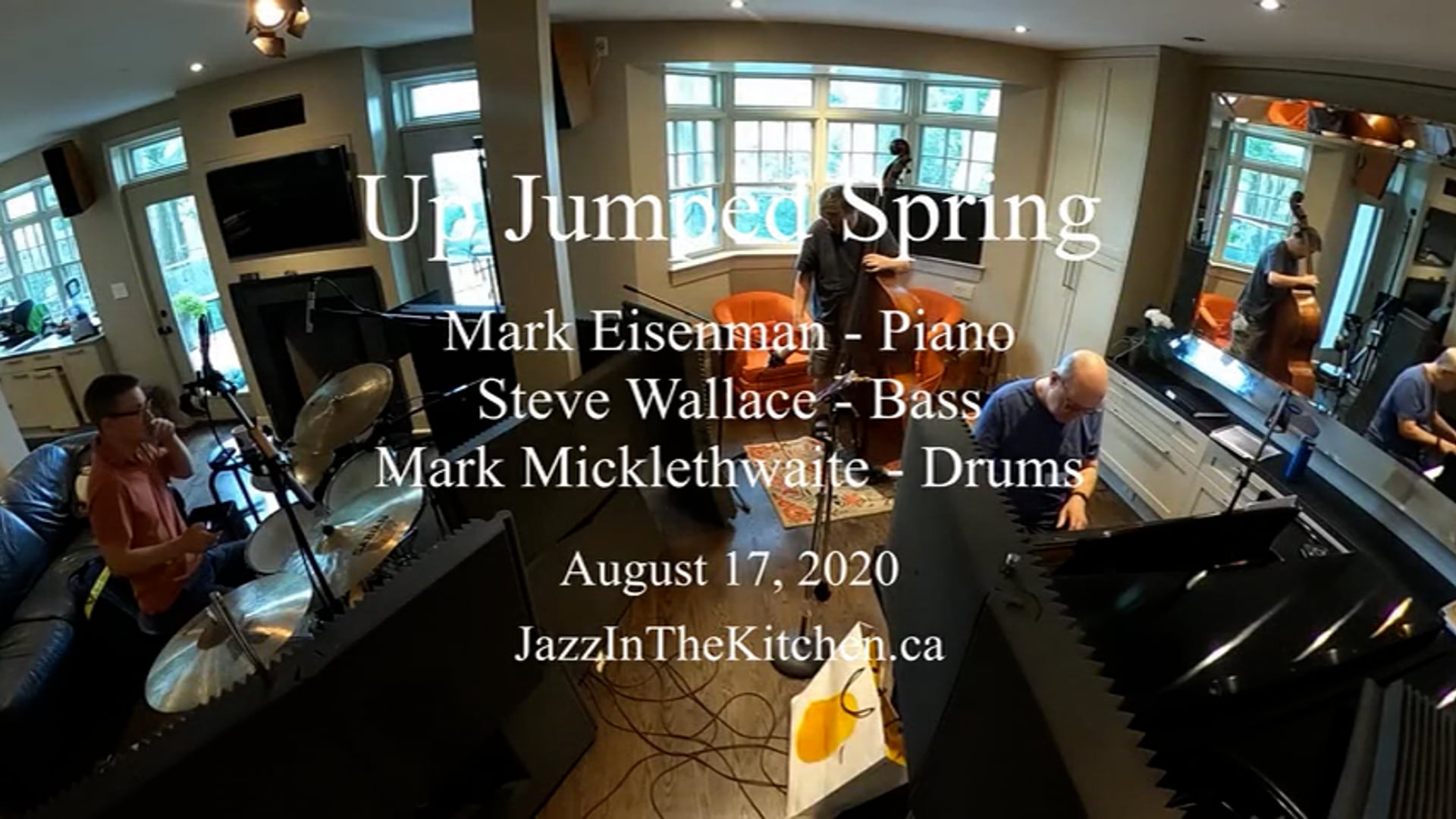
Up Jumped Spring'Up Jumped Spring' is a 1962 composition by trumpeter/composer Freddie Hubbard. It’s written in a traditional AABA form, except that the ‘A’ sections have 16 measures each while the bridge is half that length, with only 8 measures. It’s a fun tune to play and can bring some variety to your repertoire if you find you’ve been playing the same tunes over and over. Tunes like Up Jumped Spring remind us how much the 'modern' jazz players were informed by the past. This is especially true of the 1960s generation of jazz greats, since many of them developed musically during the Hard Bop period of the late 1950s. We can see this with musicians such as Herbie Hancock, Wayne Shorter, and the composer of this tune, trumpeter Freddie Hubbard. From Keyboarding Improv.